

LinkedIn agency for B2B campaigns and performance
LinkedIn is one of the key platforms in B2B marketing when it comes to reaching decision-makers, building visibility, and systematically developing demand. Few other channels offer comparable capabilities to target audiences precisely by industry, function, and company.
As a media agency for strategic campaign management and media planning, we do not primarily view LinkedIn as a content platform, but as a controllable performance channel. The focus is not on individual posts, but on the targeted management of reach, the activation of relevant audiences, and the development of demand based on specific topics and offerings.
Especially in B2B, LinkedIn delivers its full impact when campaigns are structured and continuously optimized. Decision-making processes are rarely linear—rather, multiple touchpoints over time build trust, relevance, and preference.
Our experts develop LinkedIn Ads and campaign structures based on target audiences, topics, and decision-making processes. This ensures that activities do not exist in isolation but form a system that connects reach, demand, and performance—and continuously improves them in a measurable way.
Build and optimize LinkedIn campaigns in a structured way
Select an appointment and evaluate target audiences, campaigns, and potential together.




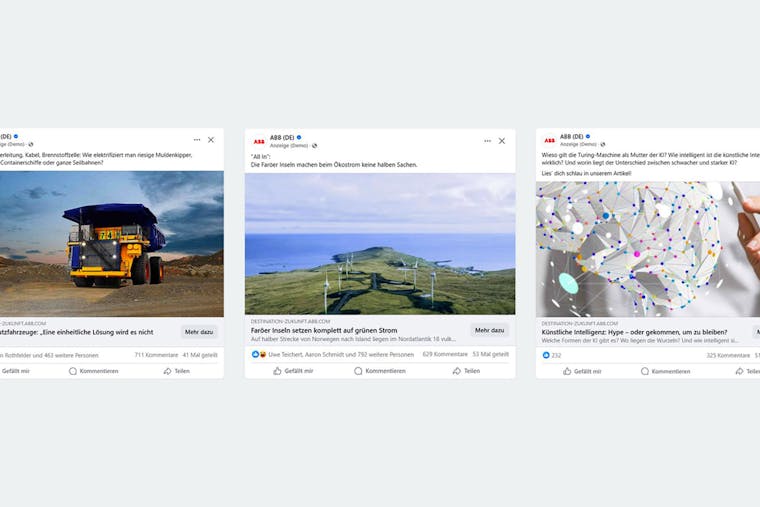
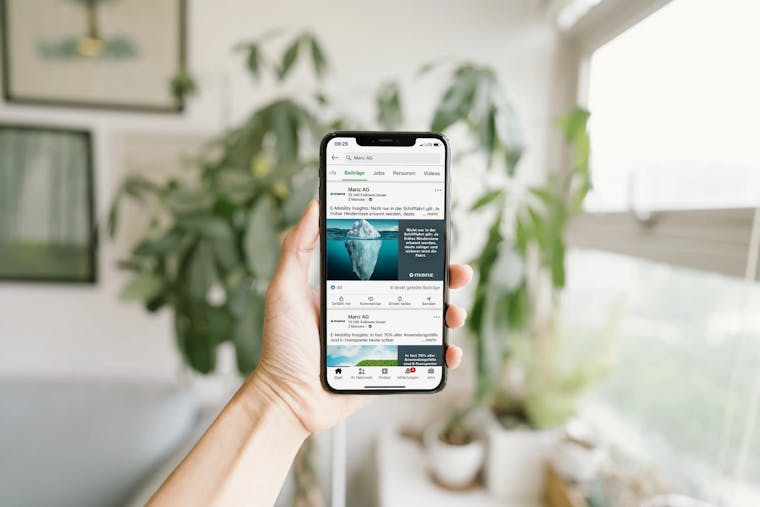
Structure instead of isolated campaigns
Using LinkedIn strategically in B2B
LinkedIn does not deliver its full impact through individual campaigns or posts, but through a clear strategic approach. What matters is how target audiences, topics, campaigns, and budgets are connected—and the logic according to which activities are structured.
Many LinkedIn marketing approaches focus on content, reach, or individual campaign formats. While these factors are relevant, they fall short if they are not embedded in an overarching structure. Especially when LinkedIn is primarily seen as a content platform, its potential for targeted demand development remains underutilized.
As a LinkedIn agency in the B2B context, we therefore develop campaigns not in isolation, but as part of a structured system. The starting point is the question of which target audiences are relevant in the market, which topics matter to them, and how concrete demand can be developed from this—a core principle of B2B LinkedIn marketing.
Connecting audiences, roles, and companies
The key advantage of LinkedIn lies in the quality of its available data. Target audiences can be defined not only by interests, but very precisely by professional attributes.
This includes:
- selection by industry, company, and market segment
- targeting by functions, roles, and seniority
- combining multiple audience criteria
- building clearly structured campaign and audience frameworks
This results in LinkedIn Ads campaigns that do not scatter broadly but precisely reach relevant decision-makers.
Structuring campaigns around topics and objectives
A structured LinkedIn approach is based on clearly defined topics and objectives. Campaigns are not set up in isolation, but developed around specific needs.
This includes:
- defining core topic areas and offerings
- developing campaigns across awareness, consideration, and conversion stages
- clearly aligning content and ads
- integrating LinkedIn Ads into an overarching campaign structure
This ensures that LinkedIn Ads are not just delivered, but operate within a clearly defined marketing and sales funnel.
Managing and prioritizing budgets effectively
Using LinkedIn strategically also means allocating budgets in a targeted way. Not every audience or topic contributes equally to demand development.
A structured approach enables:
- prioritization of relevant campaigns
- targeted budget allocation based on objectives
- continuous optimization based on performance data
- clear separation between reach building and activation
This results in a LinkedIn Ads setup that not only creates visibility but also contributes directly to demand development—an approach followed by a specialized LinkedIn Ads agency in the B2B context.
LinkedIn as part of a larger system
LinkedIn delivers the most sustainable impact when campaigns are not viewed in isolation but in combination with other marketing activities. Content, website, additional channels, and sales processes all significantly influence success.
As a LinkedIn agency, we therefore consider:
- alignment of campaigns with content and offerings
- integration into marketing and sales processes
- use of data from multiple channels
- continuous development based on clear objectives
In this way, LinkedIn is not treated as a standalone channel, but as part of a performance system—especially in combination with social media marketing for reach development and Google Ads for targeted demand activation.
Building and activating demand effectively
LinkedIn within the demand and performance system
LinkedIn reaches its full potential not in isolation, but in combination with other marketing activities. Individual campaigns can generate visibility—but sustainable impact only emerges when this reach is systematically leveraged and further developed.
This is where the difference between traditional LinkedIn marketing and a structured approach becomes clear. As a LinkedIn agency in the B2B context, we do not see LinkedIn as a standalone channel, but as part of a broader demand and performance system—a core component of B2B LinkedIn marketing.
Building reach in a targeted way
LinkedIn enables companies to reach target audiences independently of specific search queries. Businesses can position topics, build visibility, and establish a presence among relevant decision-makers.
A structured use of LinkedIn Ads enables:
- targeted engagement of defined audiences
- continuous development of market visibility
- placement of relevant topics and offerings
- building awareness over extended periods
This turns LinkedIn into a key component for creating demand in the market—especially when LinkedIn Ads are used strategically and continuously developed.
Activating demand in a targeted way
While LinkedIn builds reach and visibility, LinkedIn Ads are responsible for activating this demand. Campaigns engage users who have already had touchpoints or show interest in specific topics.
Together, this creates:
- targeted activation of relevant audiences
- conversion of attention into interaction
- development of qualified contacts
- measurable contributions to leads and pipeline
This turns LinkedIn into a channel that not only creates visibility but also delivers tangible impact—an approach systematically pursued by a specialized LinkedIn Ads agency in the B2B context.
Connecting demand and performance
The greatest impact is achieved when LinkedIn is structurally connected with performance marketing. Reach, interaction, and activation work together and follow a shared logic along a clearly defined marketing and sales funnel.
In combination with demand generation for systematic demand development, this creates an approach that not only leverages demand but actively builds it.
At the same time, LinkedIn is strategically integrated—especially in combination with demand and performance marketing as an integrated system and Google Ads for targeted demand activation.
This means:
- LinkedIn builds visibility and relevance
- LinkedIn Ads activate demand in a targeted way
- Google Ads capture specific search intent
- performance data feeds back into overall management
- all activities follow a shared structure
LinkedIn as part of a scalable architecture
When LinkedIn is embedded in an overarching structure, campaigns can not only be executed but also scaled in a targeted way. Successful approaches are expanded, while less effective measures are adjusted or replaced.
This enables:
- clear positioning of campaigns within the overall strategy
- connection between reach, demand, and pipeline
- continuous development based on data
- targeted scaling of successful activities
In this way, LinkedIn becomes an integral part of a system that sustainably develops demand and makes it measurable—and a core component of the work of an experienced LinkedIn agency in B2B.
Managing targeting, formats, and performance
Implementing structured LinkedIn Ads campaigns
The success of LinkedIn in B2B marketing largely depends on how campaigns are structured, managed, and optimized. While organic content primarily drives visibility, LinkedIn Ads enable precise targeting of relevant audiences and controlled campaign management.
As a LinkedIn agency, we develop LinkedIn Ads campaigns based on target audiences, topics, and specific marketing objectives. The goal is not to generate as many impressions as possible, but to reach relevant decision-makers and activate demand in a targeted way—an approach followed by a specialized LinkedIn Ads agency in the B2B context.
Targeting audiences in detail
The greatest advantage of LinkedIn Ads lies in its precise targeting capabilities. Audiences can be defined not only by interests but also through detailed company and profile data.
This includes:
- targeting by company, industry, and market segment
- selection by function, seniority, and area of responsibility
- combining multiple criteria for precise audience definition
- building retargeting and lookalike structures
This results in LinkedIn campaigns that do not scatter broadly but specifically reach relevant decision-makers—a key success factor in B2B LinkedIn marketing.

Using campaign formats strategically
LinkedIn offers a variety of ad formats that can be used depending on specific objectives. The key is to select and manage them in a structured way.
These include:
- sponsored content for reach and engagement
- lead ads for direct generation of qualified contacts
- message ads for targeted, personal outreach
- video ads for complex or explanatory content
A structured use of these formats ensures that LinkedIn Ads do not operate in isolation but are aligned with a clearly defined marketing and sales funnel.
Structuring campaigns along the funnel
LinkedIn campaigns should not be treated as isolated activities but structured along the decision-making process. Different audiences require different impulses at different stages.
A structured approach includes:
- campaigns for awareness (visibility and topic positioning)
- campaigns for consideration (engagement and deeper interaction)
- campaigns for conversion (leads and concrete inquiries)
This creates a campaign logic that guides users step by step through the decision process and activates them effectively.

Measuring and optimizing performance
LinkedIn Ads provide extensive capabilities for analyzing and optimizing campaigns. Data forms the foundation for continuously improving performance.
A structured optimization process includes:
- analyzing reach, clicks, and engagement
- evaluating conversion rates and lead quality
- adjusting audiences, formats, and budgets
- continuously refining successful campaigns
This creates a process that stabilizes and measurably improves LinkedIn campaigns—an approach consistently applied by an experienced LinkedIn agency in performance marketing.
Foundation for scalable LinkedIn performance
When LinkedIn Ads are structured and continuously optimized, they create a solid foundation for scalable performance. Campaigns can be expanded strategically, budgets allocated efficiently, and results improved sustainably.
This turns LinkedIn into a channel that not only generates short-term leads but also contributes to long-term demand and pipeline development—especially in B2B LinkedIn marketing.
Reaching and activating decision-makers with precision
Using LinkedIn effectively in B2B
LinkedIn is one of the few channels specifically designed for B2B marketing. Target audiences are not anonymous users, but clearly identifiable companies, roles, and decision-makers. This makes LinkedIn a central component of B2B LinkedIn marketing.
At the same time, its requirements and dynamics differ significantly from traditional B2C approaches. Activities must go beyond generating reach and instead target relevant contacts based on specific needs.
Targeting audiences in B2B with precision
In B2B, LinkedIn marketing is not aimed at broad audiences but at clearly defined companies, roles, and functions. Often, multiple stakeholders are involved in a decision, each contributing different perspectives.
This means:
- targeting specific industries and companies
- considering different decision-making roles
- aligning campaigns with concrete problems and topics
- developing campaigns along complex decision processes
This results in LinkedIn Ads campaigns that are not only visible but actually reach relevant target audiences—a key success factor for a specialized LinkedIn agency in B2B.
Quality over reach
In B2B, it is less important to reach as many users as possible. What matters more is engaging the right decision-makers at the right time and generating high-quality interactions.
A structured approach therefore focuses on:
- targeted selection of relevant audiences
- precise management of LinkedIn Ads
- clear focus on high-quality contacts
- continuous optimization based on quality and relevance
This creates performance that is strong not only quantitatively but, above all, qualitatively—an approach followed by an experienced LinkedIn Ads agency.
Using LinkedIn along the decision process
B2B decisions are rarely made spontaneously. Prospects research over extended periods, compare providers, and gradually develop concrete needs.
LinkedIn can actively support this process:
- maintaining continuous presence around relevant topics
- creating repeated touchpoints along the customer journey
- activating demand through LinkedIn Ads as relevance increases
- supporting the development of trust and preference
This turns LinkedIn into a channel that not only creates visibility but actively contributes to demand development—a core element of B2B LinkedIn marketing.
Connecting content, media, and performance
In B2B, LinkedIn reaches its full impact only through the interaction of different disciplines. Content alone is not enough—what matters is how it is distributed, managed, and integrated into campaigns.
In combination with social media content and editorial work, this creates an approach that connects content, reach, and performance.
This means:
- content creates relevance and context
- LinkedIn Ads provide targeted reach
- performance data drives continuous improvement
- all activities are interconnected
Industry and audience expertise as a success factor
Successful LinkedIn marketing in B2B requires more than campaign management. What matters is a deep understanding of markets, technologies, and the specific needs of target audiences.
This includes:
- industry knowledge and market understanding
- understanding of complex products and services
- development of relevant content and messaging
- close alignment between marketing, sales, and management
This results in LinkedIn campaigns that not only perform well but also deliver strong messaging and create lasting impact—a core component of the work of an experienced LinkedIn agency.
Collaboration with a clear system
Implementing LinkedIn marketing in a structured way
Integration into existing marketing structures
Many companies already have established marketing activities. LinkedIn is not built in isolation, but deliberately integrated into these structures.
This includes:
- aligning LinkedIn Ads with existing campaigns
- integrating into marketing and sales processes
- leveraging existing data and systems
- developing existing approaches instead of starting from scratch
This creates an approach that is compatible with existing setups and systematically leverages existing potential—an essential difference between isolated execution and structured collaboration with a LinkedIn agency.
Collaboration based on clear objectives
Structured collaboration is based on clearly defined goals. LinkedIn marketing is not optimized in isolation, but managed according to its impact on reach, demand, and pipeline.
This collaboration includes:
- defining objectives and priorities
- aligning target audiences and topics
- continuous analysis and development
- transparent communication of results
As a LinkedIn agency, we ensure that all activities contribute to these goals and clearly support performance development.
Continuous management and optimization
LinkedIn campaigns require ongoing management and development. Campaigns are continuously analyzed, adjusted, and optimized to improve their impact.
A structured approach includes:
- regular analysis of reach and performance data
- adjustments to LinkedIn Ads, audiences, and formats
- optimization of budgets and delivery
- continuous development based on insights
This creates an ongoing process that stabilizes and measurably improves LinkedIn marketing—especially when LinkedIn Ads are used strategically as a performance channel, as implemented by a specialized LinkedIn Ads agency in B2B.
Programs instead of isolated activities
Instead of isolated campaigns, we focus on structured programs that operate over longer periods. LinkedIn is treated as part of a broader performance system.
These programs include:
- clearly defined topics and target audiences
- aligned LinkedIn campaigns and content
- continuous optimization and development
- measurable objectives along a clearly defined marketing and sales funnel
This turns LinkedIn into a channel that not only delivers short-term results but also contributes sustainably to demand development—an approach consistently pursued by an experienced LinkedIn agency in the B2B context.
Typical starting situations in B2B
When LinkedIn marketing makes sense
LinkedIn is already used in many companies—often, however, without a clear structure or without delivering the desired contribution to demand development. Especially in B2B, there are typical situations where a systematic approach makes a decisive difference.
Campaigns are running but deliver little impact
LinkedIn campaigns generate visibility and interactions but contribute only marginally to the development of leads or concrete business opportunities. The connection between activities and results remains unclear.
A structured approach ensures that LinkedIn marketing is aligned with demand, pipeline, and concrete objectives.
High reach but low relevance
Content reaches many users but fails to engage the right target audiences. The quality of contacts falls short of expectations.
Through precise targeting and the strategic use of LinkedIn Ads, reach is not only increased but made more relevant.
Lack of campaign structure
LinkedIn activities have often evolved over time and consist of individual measures without a clear connection. Campaigns, content, and audiences are not systematically aligned.
A LinkedIn agency brings structure to existing approaches and develops campaigns based on clearly defined target audiences, topics, and objectives.
Focus on content instead of performance
Many LinkedIn strategies focus heavily on content and posting frequency. Their contribution to demand development often remains unclear.
A structured approach shifts the focus:
- from content to targeted reach
- from interaction to relevant demand
- from isolated activities to systematic performance
Complex target audiences and long decision processes
In B2B environments, target audiences are clearly defined, decision-making processes are multi-stage, and buying cycles are often long. Standardized approaches are only partially effective in this context.
LinkedIn marketing must be specifically aligned with these requirements to reach relevant decision-makers sustainably.
Build and optimize LinkedIn campaigns in a structured way
Select an appointment and evaluate target audiences, campaigns, and potential together.
FAQs
Frequently asked questions
about LinkedIn agencies
A LinkedIn agency plans, develops, and manages campaigns on LinkedIn with the goal of reaching relevant target audiences, building visibility, and activating demand in a targeted way.
Unlike purely editorial approaches, a specialized LinkedIn agency combines content, LinkedIn Ads, and performance management into a structured system that delivers measurable results.
LinkedIn Ads are paid advertisements on the LinkedIn platform. They enable precise targeting of audiences based on industry, function, company, or seniority.
Especially in B2B marketing, LinkedIn Ads offer a unique opportunity to reach decision-makers directly and manage campaigns in a measurable way—a core component of a LinkedIn Ads agency’s work.
The cost of LinkedIn Ads depends on the target audience, competition, and campaign objectives. Typical cost-per-click (CPC) in B2B often ranges between €5 and €12, but can be higher depending on the audience.
What matters is not the individual CPC, but the quality of the audience reached and the contribution to qualified leads and pipeline development.
A LinkedIn agency is particularly useful when campaigns need to be structured, managed strategically, and measurably improved.
Typical situations include:
- unclear performance of existing LinkedIn campaigns
- lack of precise audience targeting
- high effort with limited results
- weak connection to leads and sales
LinkedIn campaigns in B2B target clearly defined audiences and take complex decision-making processes into account. Activities must go beyond reach and instead engage relevant contacts and guide them along the decision process.
A structured approach combines reach building, activation through LinkedIn Ads, and continuous performance management—a core element of B2B LinkedIn marketing.
LinkedIn Ads offer several key advantages in B2B:
- precise audience targeting by industry and function
- direct access to decision-makers
- high-quality data and targeting capabilities
- measurable results across leads and pipeline
This makes LinkedIn Ads a key performance channel in B2B marketing.
CPCs on LinkedIn are generally higher than on platforms like Google or Meta, as the audiences are more specific. In B2B, CPCs between €5 and €12 are common, and can be higher in specialized industries.
However, the higher investment often pays off through higher-quality contacts and direct access to decision-makers.
LinkedIn is a key channel in performance marketing, especially in B2B. It allows companies to reach audiences early, build demand, and activate it in a targeted way.
In combination with other channels such as social ads or Google Ads, it forms an integrated approach across the entire funnel.
LinkedIn campaigns can generate initial results such as reach and engagement in the short term. However, sustainable demand development and measurable performance build over a longer period through continuous optimization.
A good LinkedIn agency goes beyond operational execution and develops campaigns based on clear strategies and structures. It connects targeting, LinkedIn Ads, and performance management and integrates LinkedIn into broader marketing and sales processes.