

Marketing controlling that makes impact visible
Marketing controlling provides the foundation to not only execute marketing, but to actively manage it. It makes visible which measures create impact, how efficiently budgets are used, and how marketing contributes to overall business success.
Especially in complex communication environments with multiple channels, markets, and target groups, marketing controlling becomes a critical tool. It connects data, KPIs, and strategic objectives into a system that creates orientation and enables well-informed decisions. As a data-driven marketing agency, Ruess Group supports companies in systematically building marketing controlling and managing it based on data.
With its integrated approach, marketing controlling goes beyond pure reporting. It links brand, content, media, and data into an overarching management logic that creates transparency and reveals interdependencies.
Ruess Group combines analytical precision with strategic understanding in marketing controlling. This creates a foundation for marketing that not only manages activities, but makes impact transparent and enables continuous improvement.
As a data-driven marketing agency, Ruess Group supports companies in systematically building marketing controlling and managing it based on data.
Your contact for marketing controlling
Schedule a non-binding strategy consultation now—easily by selecting a time that suits you.




Definition, objectives, and strategic classification
What is marketing controlling?
Reducing complexity and managing marketing effectively
Why marketing controlling is essential

Creating transparency and improving marketing in a targeted way
Objectives and benefits of marketing controlling
Key objectives of marketing controlling
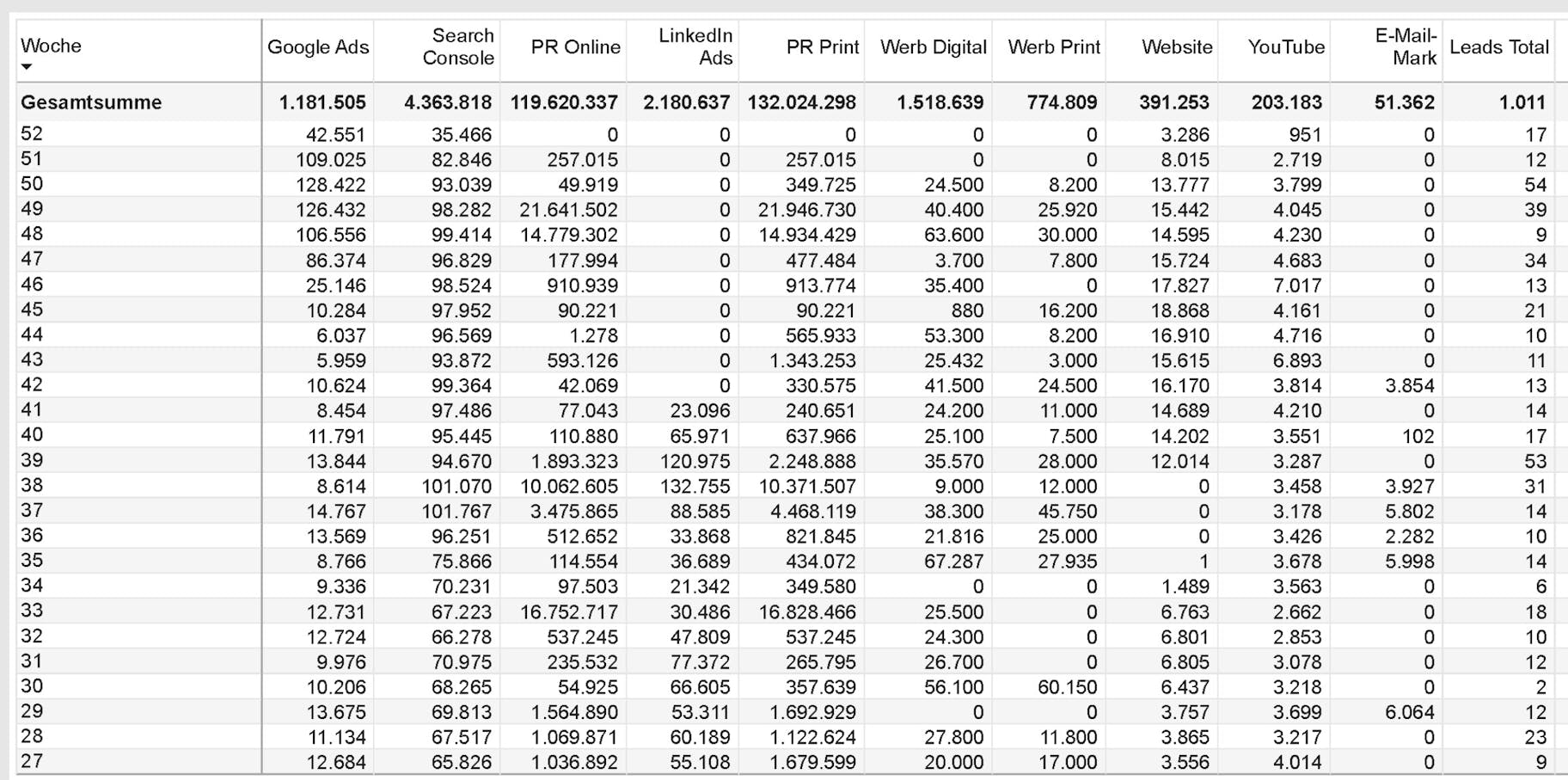
Concrete benefits for companies
Concrete benefits for companies
Collecting, analyzing, and translating data into decisions
The process in marketing controlling
Marketing controlling is not a one-time step, but a structured process. It becomes most effective when data is systematically integrated and actively used for decision-making—an approach we consistently apply as a data-driven marketing agency.
At the core is the connection between data, marketing controlling KPIs, and strategic objectives. Only when these elements are aligned does a reliable foundation for decision-making emerge.
Collecting and integrating data
The foundation of marketing controlling is the systematic collection of relevant data. This includes information from various sources, such as digital channels, campaigns, CRM systems, or market research.
The key is not to view this data in isolation, but to connect it. This creates the relationships needed to evaluate measures and effectively manage marketing.
Defining and evaluating KPIs
Based on the data, marketing controlling KPIs are developed to evaluate performance. These KPIs create comparability and make it visible which activities are delivering impact.
It is important not only to measure short-term performance, but also to include strategic KPIs that reflect long-term development.
Analysis and interpretation
Pure data analysis is not sufficient in marketing controlling. What matters is interpreting results in the context of market conditions, target groups, and strategic objectives.
Only through this interpretation do insights emerge that serve as a foundation for informed decisions and highlight concrete actions.
Management and optimization
Based on the analysis, measures are adjusted, prioritized, and further developed. Marketing controlling ensures that decisions are not made in isolation, but are based on a consistent data foundation.
This creates a continuous process in which marketing is systematically optimized and actively managed.
Marketing controlling as a continuous cycle
The marketing controlling process is not linear, but cyclical. Data, KPIs, and decisions interact continuously, enabling ongoing development of marketing.
In this way, companies establish a system that not only provides transparency, but also increases impact and efficiency over the long term.
Integrating data and using it as a foundation for management
Systems and infrastructure in marketing controlling
Marketing controlling only works sustainably when data is systematically collected, integrated, and made accessible. The technical and organizational infrastructure forms the foundation for this.
In many companies, data exists across different systems—such as CRM solutions, marketing platforms, web analytics tools, or external data sources. Without a clear structure, this information remains isolated and can only be used to a limited extent for decision-making.
Connecting and integrating data sources
A central step in marketing controlling is the integration of relevant data sources. The goal is to create a consistent view across all marketing activities.
By integrating data, relationships become visible: Which measures lead to which results? How do different channels interact? And where is there potential for optimization?
Creating a central data foundation
To implement marketing controlling effectively, companies need a central data foundation—often built as a data warehouse or similar structure.
This central data base enables consistent calculation of marketing controlling KPIs, cross-functional data analysis, and a unified view of marketing performance.
Building reporting and dashboards
Based on integrated data, reports and dashboards are developed to present relevant information clearly. They make marketing controlling usable in daily operations and support management and teams in decision-making.
What matters is that reports do not just display data, but highlight relationships and support concrete decisions.
Establishing structures for sustainable use
Beyond the technical infrastructure, organizational integration is essential. Marketing controlling must be embedded into processes so that data is used regularly and decisions are consistently based on it.
Only then does a system emerge that works sustainably and is not dependent on individual projects or tools.
Marketing controlling as an integrated system
Only through the integration of data, systems, and processes does marketing controlling reach its full potential. This creates the foundation for structured management, clear decision-making, and the continuous development of marketing.
Using data to manage marketing effectively
Practical example of marketing controlling
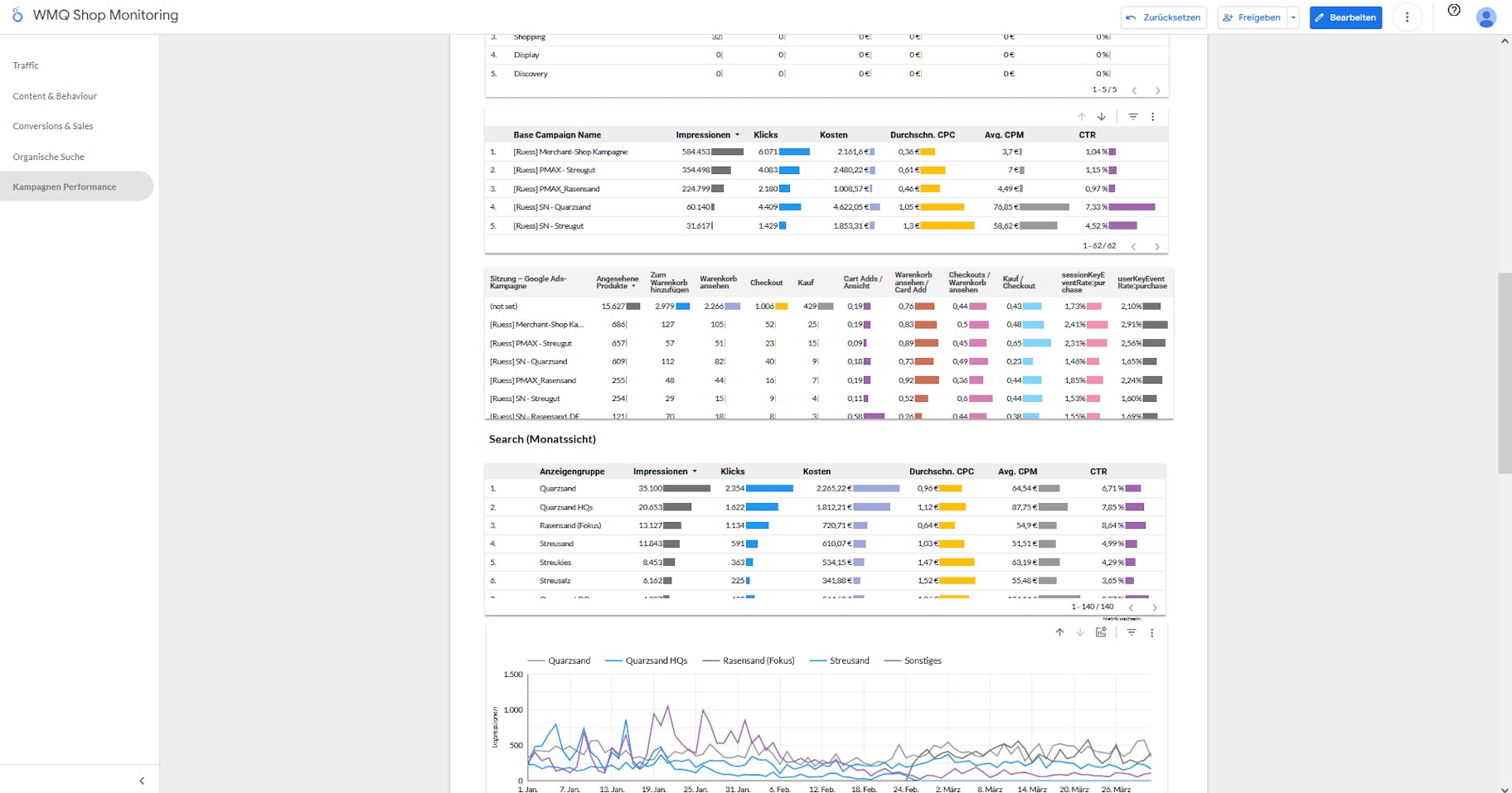
Initial situation
Initial situation
Approach in marketing controlling
Result
Result
Marketing controlling as a foundation for better decisions
Marketing controlling as a foundation for better decisions
Structured approaches for data-based decision-making
Why Ruess Group for marketing controlling
Many companies are working on marketing controlling but face challenges in implementation. Data is available, KPIs are defined, but consistent management is missing.
The difference lies not in individual tools or methods, but in the ability to connect data, KPIs, and processes into a functioning system.
Taking a holistic view of marketing controlling
Ruess Group does not see marketing controlling as an isolated discipline, but as an integral part of marketing management. Data, strategic objectives, and operational measures are connected to create a consistent overall picture.
Translating data into decisions
As a data-driven marketing agency, we help companies build marketing controlling in a way that ensures data is actually used. KPIs are not just tracked, but translated into concrete decisions.
Experience in complex B2B structures
Our work is shaped by projects in international and technology-driven markets. These environments create particularly high demands on marketing controlling, data integration, and management logic.
This experience enables us to make even complex structures understandable and translate them into effective processes.
Focus on sustainable impact
Marketing controlling does not create impact in the short term, but through continuous development. We build structures that work over the long term and make marketing progressively more efficient and effective.
From marketing controlling to systematic management
For us, marketing controlling is not an end in itself, but the foundation for better decisions. Companies gain clarity, can manage marketing more effectively, and develop it sustainably.
If you want to systematically build or further develop your marketing controlling, we are happy to support you.
Contact
If you want to further develop your marketing controlling in a data-driven way, we are happy to support you as a data-driven marketing agency.
FAQs
Frequently asked questions
about marketing controlling
Marketing controlling includes the planning, management, and evaluation of marketing activities based on data and KPIs. The goal is to make the impact of measures measurable and enable well-informed decisions.
Marketing controlling creates transparency about the effectiveness of measures and the use of budgets. Companies understand which activities are successful and can manage and optimize marketing more effectively.
Core tasks include defining objectives, collecting and analyzing data, developing KPIs, and deriving measures for optimization.
Marketing controlling KPIs include both operational and strategic metrics, such as reach, leads, conversion, ROI, as well as qualitative indicators like brand perception or reputation.
In practice, marketing controlling starts with collecting data from various sources. This data is consolidated, analyzed, and translated into KPIs that serve as the basis for decisions and optimization.
Reporting presents data and results, while marketing controlling goes further. It connects analysis, evaluation, and management, and serves as the basis for concrete marketing decisions.
Building marketing controlling starts with analyzing existing data and systems. Based on this, KPIs are defined, processes are developed, and a structure is created that enables continuous management.
Data is the foundation of marketing controlling. It enables companies to evaluate measures, identify interdependencies, and make decisions based on solid insights.
Marketing controlling is particularly valuable for companies with many marketing activities, multiple channels, or international markets. The more complex the structure, the greater the benefit.
An agency supports marketing controlling by structuring data, defining KPIs, and developing systems that make marketing measurable and manageable.