B2B branding agency with a system

Brand identities for international B2B markets

Brand impact in international B2B markets is built on a robust system. Branding is the discipline that translates positioning into a tangible brand identity: brand names, logos, color and typography systems, imagery, tone of voice, and the brand experience at every touchpoint. As attention becomes increasingly fragmented and AI-generated content floods the market, the value of consistent brand identities grows. Brands become anchors of trust — and therefore an economic factor.

As a B2B branding agency, we work according to a structured approach that carries brands from the first sketch through to international implementation. We develop brand cores, naming concepts, and visual systems that hold their ground in technical buying centers and demonstrate substance at board level.

Our work is aimed at B2B companies that want to build, sharpen, or roll out their brand internationally. At the center is a brand identity that maintains a precise message in complex markets and can be translated across different applications. From naming and corporate design to the brand experience, we develop identities built to last.

Your contact

Schedule an initial consultation. We’ll show you how your brand can be sharpened across identity, design, and brand experience — and which steps are worth taking in the short term.


Steffen Ruess

Steffen Ruess

Managing Partner
Ruess Group

Why brands drive growth in B2B

Branding becomes an economic lever

In B2B business, the impact of branding was underestimated for a long time. Purchasing decisions were considered purely rational, while brands were seen as little more than an add-on to performance. Behavioral economics research, however, shows that familiarity, affinity, and perceived status also influence industrial decision-making before rational arguments are compared. Several current developments are further changing the situation: expanding buying centers, fragmented attention, generative AI, and increasing market volatility.

From the perspective of a B2B branding agency, this creates four effects with direct economic relevance:

  • Expanding buying centers: Industrial purchasing processes today involve six to ten stakeholders. A strong brand reduces the perceived group risk and makes individual recommendations easier to defend.
  • The 95–5 rule: Studies by Ehrenberg-Bass and the LinkedIn B2B Institute show that at any given time, only around five percent of a B2B market is actively in buying mode. Branding invests in the 95 percent who will remember later.
  • The value of consistent identities: Where AI makes content endlessly producible, brands gain value when they remain distinctive through their own codes, language, and experiences.
  • Volatility and pricing: In markets shaped by supply chain pressure, tariffs, and investment uncertainty, a well-managed brand serves as an anchor of trust. It supports price levels and reduces the perceived investment risk on the buyer side.

Branding therefore becomes a discipline with measurable economic relevance for marketing leaders and executive boards. Investments in brand identity contribute to market position, pipeline development, and pricing flexibility. Studies by Bain, Kantar, and McKinsey show that strong B2B brands achieve price levels two to six percent above the competition without losing volume. A B2B branding agency therefore works along the value contributions of the business and provides metrics that connect with reporting to the CFO and supervisory board.

Four competencies of a B2B branding agency

What makes B2B branding built to last

B2B branding follows its own requirements. Content is more explanation-intensive, decision-making paths are longer, stakeholders are more diverse, and markets are denser both technically and economically. A B2B branding agency that can support this reality combines four competencies that depend on and reinforce one another.

Four competencies shape the work of a B2B branding agency that wants to create market impact:

  • Industry and buying-center depth: As a B2B marketing agency, we understand our clients’ decision-making structures, specialist audiences, and economic logic. We know technical content and the language industrial companies use to engage with their markets. This depth allows brand work to start where business is created.
  • International applicability: Brand identities today are deployed across countries, languages, and regulatory environments. We develop systems that remain centrally manageable while enabling local adaptation without loss of substance.
  • Strategic and creative substance: Positioning, identity, and brand experience work together. A B2B branding agency delivers strategic brand work and creative execution within one team that thinks in both languages. This creates identities that hold up argumentatively and convince visually.
  • Connection to leadership: Branding decisions are defended at board level and carried operationally by marketing. We formulate our work in a way that connects with both levels and keeps investments justifiable.

Together, these four competencies form a branding system that holds up in complex B2B markets. It combines strategic depth with creative excellence and guides brand work in a way that measurably contributes to market position and pipeline. This makes branding plannable. It works as an investment that supports the business.

From visibility to pipeline

Impact emerges in five stages

Brand impact does not happen in a single step. It builds across five stages that follow one another and involve different marketing disciplines. Branding contributes to all five, but most strongly to the stages of preference and trust, where brands influence decisions.

  • Visibility. Brands need to be seen in the markets where decisions are made: in buying centers, industry forums, trade media, and search results. Branding ensures recognition here. A distinctive logo, typography system, and color system create the first space of perception. This stage can be measured through reach, share of voice, media presence, and share of search.
  • Relevance. Visibility alone is not enough. Brands become associated with the topics that move their customers’ businesses. Branding provides the argumentative architecture: the messaging system, brand personality, and tone of voice through which a company leads its topics. This can be measured through thought leadership, engagement, citations, and inbound inquiries.
  • Preference. Appearing on a shortlist is not enough. Preference emerges when a brand convinces in comparison. Branding supports this step with a brand identity that takes priority in perception: through distinctive codes, linguistic independence, and a coherent brand experience. This can be measured through brand strength, shortlist share, and pitch win rate.
  • Trust. In B2B, no single person carries a decision alone. Trust reduces risk within the buying center and makes recommendations defensible. Branding supports this stage through consistency: those who experience the same brand identity over years build trust without additional activity. This can be measured through NPS, reputation, reference volume, and recommendation rate.
  • Inquiries and pipeline. Qualified demand emerges from the first four stages. Branding works indirectly here, but noticeably: brands with a well-established identity achieve shorter sales cycles, higher win rates, and a more resilient pipeline. This can be measured through MQLs, SQLs, pipeline contribution, and marketing-sourced revenue.

These five stages allow marketing leaders to manage branding as a systematic growth discipline. Each stage has its own levers and its own metrics. Those who structure them can justify investments, measure impact, and further develop the branding system over years.

From brand core to roll-out

Services of our B2B branding agency

Our services as a B2B advertising agency cover the entire development and management of a brand identity. We combine strategic work on the brand core with creative execution and internationally applicable systems. The following eight service areas interlock and are combined on a project-specific basis. We define the focus together with our clients, depending on the brand’s level of maturity and strategic task.

  • Brand strategy and positioning. We sharpen the strategic core of a brand and translate business objectives into a positioning that holds up in the competitive environment. This includes the brand promise, target audience profile, competitive differentiation, and the set of differentiating drivers that make the brand manageable. All further steps emerge from this foundation. It is the prerequisite against which identity, design, and communication are aligned.
  • Naming and brand architecture. Brand names and product names shape perception over the long term. We develop names with meaning, linguistic independence, and international viability. At corporate level, we structure brand architectures in which the corporate brand, product brands, and sub-brands are assigned clearly defined roles.
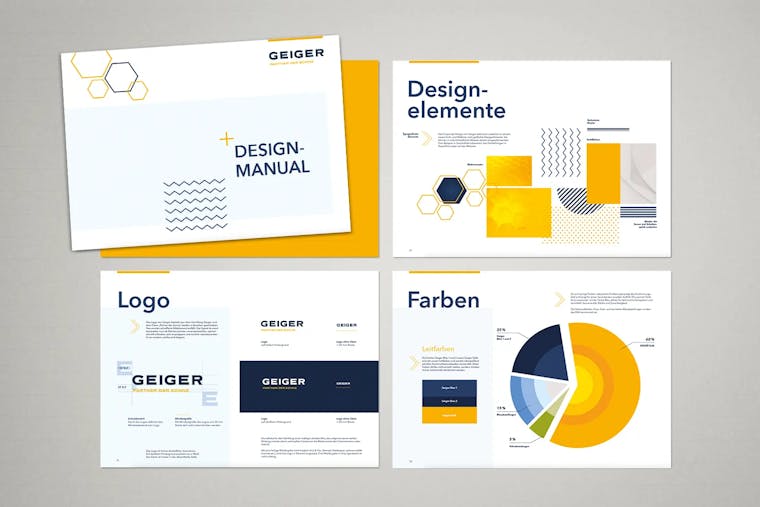
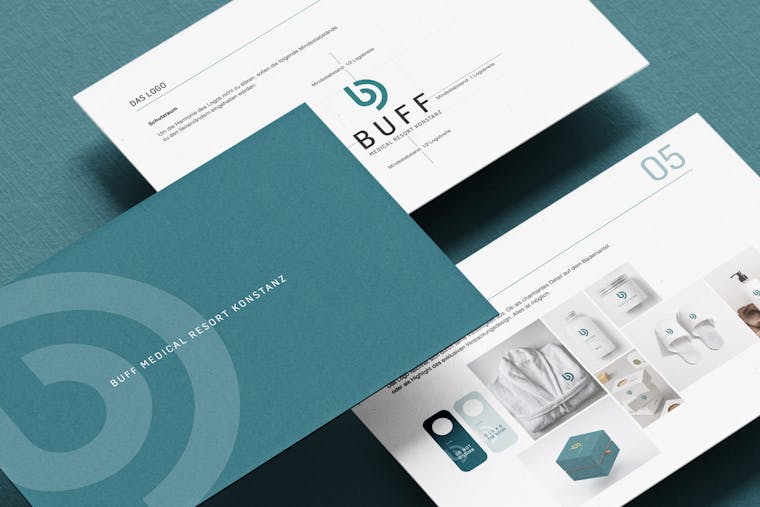
  • Logo and corporate design. The logo is the condensed form of a brand. We develop logos that remain simple, distinctive, and applicable across generations. Corporate design translates the logo into corporate branding that creates recognition and reduces complexity. The result is a consistent visual identity that works both digitally and physically.
  • Color and typography system. Colors and typefaces are the silent language of a brand. We develop color palettes and type families that function in digital and analogue environments, achieve accessible contrasts, and create clarity in international applications. This gives the brand visual distinctiveness across every surface.
  • Imagery and visual identity. Images communicate attitude before texts are read. We develop image worlds, illustration styles, and design principles that allow brands to tell their position visually. In B2B, this often means making technical content aesthetically accessible without trivializing it.
  • Tone of voice and brand personality. A brand speaks. We define brand personality, values, and brand voice so that a company communicates in a recognizable way. From the main message to website microcopy, every language element follows a coordinated line.
  • Brand experience and touchpoints. Today, a brand is experienced in many places: at trade fairs, on websites, in sales materials, in product design, and in employer branding. We design consistent brand experiences across all touchpoints where an industrial or technology brand is perceived. The transitions between touchpoints become the actual brand experience.
  • Rebranding, brand refresh, and roll-out. Brands continue to evolve. We support rebrandings following acquisitions or strategic shifts and manage brand refresh projects for established brands that want to recalibrate their impact. In international roll-outs, the B2B branding agency translates brand identities into local applications and market presences.

The sequence of services depends on the specific task. Some clients start with strategy and naming, others with corporate design or roll-out. As a branding agency for B2B brands, we define the focus together with our clients and bring the disciplines together in a way that develops the brand as a whole.

Industries that demand explanation and substance

Industrial branding agency with sector depth

Brand work in B2B is industry work. A brand gains impact from understanding the economics, language, and decision-making paths of its specific industry. As an industrial branding agency, we focus on technically driven and explanation-intensive markets where identity, trust, and substance determine pipeline and price levels. This sector depth is the foundation for brand work that creates impact in complex markets.

Industries differ in mechanics, language, and regulation. What connects them is the need for a brand identity that convinces in buying centers, trade media, and international markets at the same time. As an industrial branding agency, we work at this intersection: we understand the respective industry, translate it into distinctive branding, and guide the brand along its economic and communicative levers.

From analysis to international development

Our branding agency’s approach

Our work follows a process that makes branding projects transparent and keeps results comparable over the years. Each step provides a defined foundation for the next.

  • Analysis. We start with a structured assessment: market, competition, existing brand identity, buying center, and objectives. The result is a briefing document that sharpens the strategic task and sets priorities for the branding project.
  • Strategy. Building on the analysis, we define brand positioning, brand architecture, and the guiding idea that identity and communication are aligned with. This strategy is approved together with marketing leadership and the executive board, so that all further steps are based on a shared foundation.
  • Concept development. In this phase, the concrete building blocks of the brand identity are created: naming, logo, color and typography system, imagery, tone of voice, and brand voice. Concepts are developed in variants, validated, and reviewed with decision-makers for long-term viability.
  • Implementation. The approved brand identity is translated into applications. We deliver brand manuals, templates, and designed touchpoints for print, digital, trade fairs, and sales materials. In international roll-outs, we manage coordination and adaptation across local markets and languages.
  • Ongoing development. After launch, our team continues to support the brand: brand governance, refresh cycles, and extensions for new products or countries. Impact is tracked through measurable KPIs and evaluated in reviews, so the branding system grows with the business.

This five-step process gives marketing leaders and executive boards confidence. Investments are justified, results become measurable, and branding develops as a systematic discipline aligned with the business. This is how a B2B branding agency works when it aims to deliver reliable impact.

Impact for brand, market, and executive board

What CMOs and marketing directors gain

The work of a B2B branding agency creates impact for CMOs and marketing directors on several levels at once. This makes branding one of the few disciplines whose effect can be demonstrated across growth, impact, and economic efficiency at the same time.

  • Growth. Brands with a consistent identity achieve shorter sales cycles, higher pitch win rates, and more stable pipeline returns. Branding thus becomes a driver of qualified demand and the foundation for sustainable brand growth.
  • Efficiency. A consistent branding system reduces coordination effort, accelerates roll-outs, and makes investments comparable across channels and markets. Marketing budgets create impact where identity is already in place.
  • Reputation. A well-managed brand strengthens perception in trade media, among investors, and in recruiting. The employer brand also benefits: top industrial talent follows brands that stand for a recognizable position.
  • Connection to leadership. Branding investments can be justified at executive board level and to the CFO. A B2B brand marketing agency that combines impact logic with metrics turns brand work into a defensible argument in business reporting.

Together, these effects make branding one of the most substantial investments an industrial or technology company can make today. As a brand agency for B2B companies, we combine creative excellence with economic relevance. This connection carries from the executive board to sales and creates impact that remains measurable over years.

Your Contact

Schedule an appointment with us. In an initial conversation, we will assess the task, substance, and possible next steps for your branding project.

Steffen Ruess

Steffen Ruess

Managing Partner
Ruess Group

FAQs

Frequently Asked Questions
about the B2B branding agency

The following seven questions are particularly common among marketing leaders when they are evaluating a B2B branding agency.

  • B2B branding addresses more complex buying centers, technically driven content, and longer purchasing cycles. Here, identity acts as a risk reducer and trust anchor for multiple stakeholders at once. The focus is on substance, recognizability, and argumentative strength. In B2B, branding works as a long-term investment in market position and brand value. A B2B branding agency carries this investment logic into every project.

  • Branding projects are calculated on a project-specific basis, depending on the scope of work, number of applications, international roll-out, and desired level of support. For a comprehensive brand definition with a corporate design relaunch, investments typically fall within the six-figure range. For a brand refresh or focused identity modules, the effort is significantly lower. A reputable B2B branding agency makes effort and added value transparent before the project begins.

  • Typical reasons include strategic shifts, internationalization, mergers and acquisitions, generational succession, or a changing competitive environment. An outdated visual identity that no longer fits the company’s position is also a strong trigger. A B2B branding agency will assess with you whether a rebranding or brand refresh is the right approach.

  • Branding impact can be measured through several KPIs: brand awareness within the target audience, shortlist share, pitch win rate, sales cycle length, share of brand-driven pipeline, and pricing flexibility. At the beginning of the project, we define with our clients which of these metrics have priority and evaluate them in regular reviews. This makes the B2B branding agency a data-driven partner for demonstrable impact.

  • Branding has particularly strong impact for industrial mid-sized companies because differentiation in competition and attractiveness in recruiting are often decisive levers. Branding projects can be set up modularly and adapted to the company’s resources, allowing measurable results even without corporate-level budgets. Even smaller branding measures can significantly elevate brand perception when they are managed systematically.

  • Both under one roof. We work as a branding design agency with our own creative depth and as a strategic brand consultancy with conceptual substance. Both disciplines are connected within one team, so strategy and design are developed together from the start.

  • We work internationally across six continents from Stuttgart, Munich, and Leipzig. Brand identities are developed centrally and adapted to local markets. A B2B branding agency in Germany can manage international roll-outs without losing local relevance because central guidelines and local degrees of freedom are aligned with one another.