B2B advertising agency for industry and technology

Campaigns and brand communication with impact in international markets

In many industrial and B2B companies, marketing is running at full speed—yet still falls short of its potential. Content is produced in parallel across different areas, campaigns are executed across numerous channels, and each unit sets its own priorities and focus.

What is often missing is an overarching idea that brings these activities together and provides clear direction.

The result: reach exists, but a distinctive profile rarely does. Messages shift, topics remain disconnected, and even complex, well-executed initiatives lose impact because they lack a strong, unifying core. Especially with complex products, intricate decision-making processes, and long buying cycles, key strengths often remain underrepresented in the market.

As a B2B advertising agency for industrial and technology companies, we bring together brand management, strategic clarity, and precise creative execution into a communication framework that makes complex content understandable, provides orientation, and creates lasting impact.

Our work is designed for companies that want to sharpen their brand internationally and manage their communication systematically—with campaigns and communication systems that do not run in isolation, but form a robust structure and measurably contribute to market position, perception, and growth.

Your Contact

Schedule an appointment and let’s discuss how you can sharpen your brand positioning and manage campaigns more effectively with a B2B advertising agency.


Steffen Ruess

Steffen Ruess

Managing Partner
Ruess Group

Guiding idea, system, and scalability

Rethinking brand management

As a B2B advertising agency for industrial and technology companies, we design communication based on a clearly defined conceptual structure. Individual activities are not the starting point. What matters is an overarching logic that organizes content, sets priorities, and enables reliable communication decisions.

At the core is a strong guiding idea. It provides direction for topics, sharpens messaging, and creates a framework that aligns markets, channels, and content. This leads to more precise decisions, more consistent content, and greater stability in campaigns.

On this foundation, design systems translate brand management into concrete applications. They ensure recognizability across markets, audiences, and channels while reducing coordination effort during execution. Where clear systems exist, brands maintain their identity—even in environments with high activity, multiple stakeholders, and international rollouts.

This structure creates tangible benefits:

  • topics build on each other and remain connected
  • campaigns maintain consistency across markets
  • brands remain precise and recognizable despite high activity
  • new content integrates seamlessly into existing systems
  • teams work from a shared foundation instead of isolated initiatives

In this context, we bring together brand management, visibility, and experience within our focus area 03, “Brand, visibility & experience.” Here, we combine strategic brand work, design systems, content, and campaigns into a consistent structure that works across all touchpoints and provides orientation. Visibility gains substance, content gains direction, and communication becomes a coherent system.

We establish the strategic foundation in close alignment with brand consulting and continue it consistently in brand communication. As a result, brand management, campaigns, and execution follow a unified logic.

Technological developments—especially the use of AI—significantly expand possibilities. Content can be created, adapted, and transferred into different contexts more quickly. However, what remains essential is the structure that guides this output and translates it into consistent brand management. AI accelerates processes; direction, prioritization, and communicative substance remain leadership responsibilities.

We design and manage these systems with a clear goal: communication that works across markets, integrates seamlessly internally, and delivers lasting impact.

Communication as an economic lever

Impact that lasts

In B2B, communication does not determine the success of individual activities—it shapes market perception and the quality of decisions in sales. Companies offering complex solutions need more than visibility. They need a form of communication that builds trust, creates relevance, and translates offerings into clear, tangible value.

For industrial and technology companies, this means that brand, campaigns, and content must create differentiation, strengthen trust, and make complex offerings understandable. In this context, communication is not a decorative add-on to the business—it is a core driver of its effectiveness.

As a B2B advertising agency, we align communication consistently with these requirements, combining strategic brand management with operational impact.

This is reflected in tangible effects:

  • brands gain clarity and recognizability in competitive markets
  • complex offerings become understandable and comparable
  • international markets can be addressed consistently
  • content and activities contribute to a shared objective
  • marketing and sales work together more effectively
  • budgets are allocated based on impact rather than activity

For CMOs and marketing directors, one key aspect becomes central: controllability. Communication can be planned, prioritized, and evaluated more precisely. Budgets are allocated based on effectiveness, activities are more clearly structured, and results can be interpreted with greater confidence.

The integration with B2B marketing, demand generation, and marketing controlling ensures that brand management and activation work together, creating a stable foundation for sustainable market development. Especially in complex markets, it is not enough to strengthen either brand or performance—what matters is continuity from strategic core to market activation.

We manage communication along this principle—from strategic direction to campaign development and execution in the market.

The focus remains clear: communication should not only be visible, but make a measurable contribution to market position, perception, and business growth.

Brand, campaign, and execution integrated

Services of the advertising agency

As a B2B advertising agency for industry and technology, we structure communication across the entire value chain—from strategic foundation to execution across markets and channels. Individual services are interconnected and combined based on project requirements. For our clients, what matters is not isolated disciplines, but the quality of how they work together.

  • Brand management & brand communication

    Sharpening positioning and messaging

    We refine positioning, develop messaging, and structure content so that brands become clearly distinguishable in competitive markets and provide a solid foundation for campaigns.

    In close alignment with brand consulting and brand communication, we anchor these elements within a structure that remains consistent across markets. This includes not only core messages, but also their tone, argumentation, and adaptability across different applications.

  • Campaign development

    Making topics visible

    Campaigns bring content together, set priorities, and give topics a clear form. They condense complexity and create a recognizable communication dynamic.

    We develop core ideas, refine content, and translate messages into visual and verbal expressions that work across channels.

    This includes:

    • development of campaign ideas and guiding concepts
    • structuring and focusing key topics
    • creation of messaging and visual assets
    • adaptation across formats and channels
    • linking brand messaging, content, and activation

    Campaigns connect brand, content, and execution—and create orientation in the market.

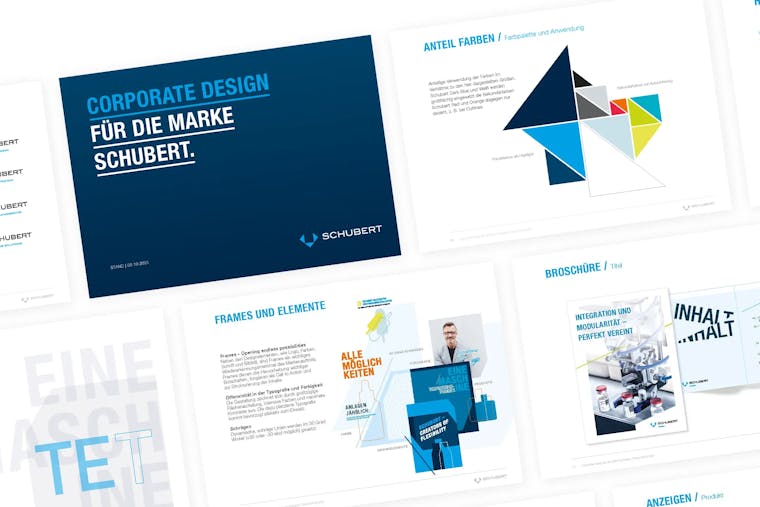
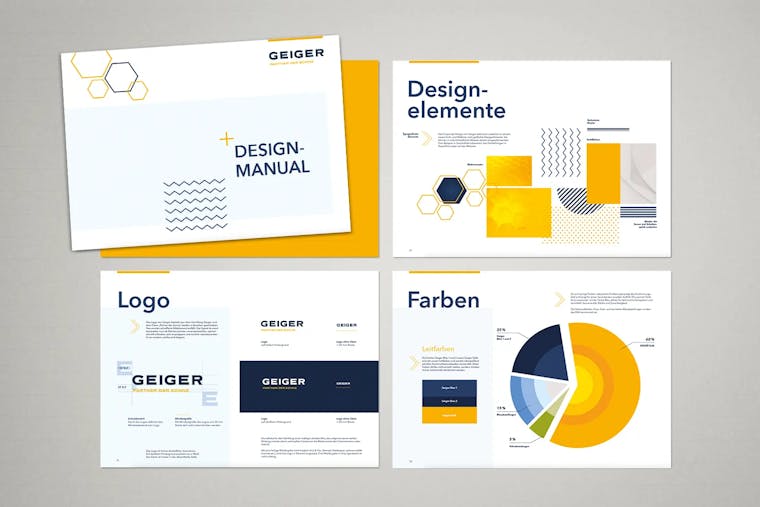
  • Corporate design & design systems

    Implementing brands consistently

    We design visual systems that ensure brand consistency across all applications and simplify execution across different markets.

    Areas of expertise:

    • development and evolution of corporate design systems
    • creation of scalable design systems
    • design of digital and physical applications
    • integration of brand management and UX design
    • development of visual rules for rollout, adaptation, and evolution

    Corporate design gives brands a visible form that is not only appealing but also applicable within complex structures.

  • Execution & activation

    Deploying campaigns effectively

    We translate campaigns and content into concrete actions and manage their distribution across relevant channels.

    In combination with:

    we deploy measures strategically, continuously optimize them, and manage them according to defined objectives.

  • Interdisciplinary collaboration

    Connecting capabilities strategically

    Depending on the requirements, we integrate additional disciplines from within our organization:

    We assemble project-based teams and align them closely with objectives and complexity. This ensures that our clients receive not a loose chain of individual services, but an integrated approach that connects strategy, creative execution, and activation.

Embedding responsibility within the organization

Communication as a leadership function

In industrial and B2B companies, communication is distributed across multiple functions. Marketing, sales, product management, and international units work in parallel on topics, content, and campaigns. This is exactly where it becomes clear whether communication gains direction—or fragments into isolated activities.

This brings a key question into focus: who leads communication—and based on which criteria?

We establish clear frameworks for this:

  • binding guidelines for content and messaging
  • clearly defined responsibilities
  • aligned processes for planning and execution
  • structures that accelerate decision-making
  • rules that make ongoing development and adaptation manageable

This clarity reduces coordination effort and increases reliability in day-to-day operations.

We structure collaboration so that content remains consistent and campaigns are aligned across functions. Especially at the interfaces between central teams, international markets, and sales-related units, it becomes evident whether communication is sustainable over time.

This anchoring becomes even more critical in international organizations. Communication requires not only a concept, but continuous leadership and development. Without this foundation, even strong content comes under pressure to adapt and loses precision.

We ensure that this leadership is effectively embedded within the organization—through clear rules, transparent processes, and a structure that provides orientation.

Structuring projects effectively

Solutions instead of isolated services

B2B projects combine multiple disciplines and must meet several objectives at the same time. Isolated measures are rarely sufficient when markets, roles, channels, and content need to be aligned.

We structure projects based on clear priorities and identify the levers that truly drive impact.

As an industrial advertising agency, we combine our services on a project basis and align them consistently with objectives, market environment, and complexity.

Typical scenarios include:

  • campaigns based on existing brands
  • continuation of design systems in international markets
  • integration of campaigns with content, media, and performance activities
  • coordination of multiple disciplines within a unified approach
  • sharpening positioning and campaigns within ongoing market activities

We prioritize, organize, and connect these components into a clearly structured approach that provides orientation and focuses impact. This logic prevents fragmented action and ensures that measures build on each other rather than run in parallel.

Our work focuses on defining and consistently implementing this structure—with a clear emphasis on impact, scalability, and long-term sustainability.

Communication across complex buying centers

Understanding decisions in B2B

B2B communication addresses decision structures with multiple roles and interests. Decisions are not made within a single function, but emerge through alignment processes where technical, economic, strategic, and operational perspectives interact.

For this reason, it is not enough to simply make content “understandable.” Content must be robust enough to support multiple perspectives at once.

We structure content so that technical, economic, and strategic viewpoints are addressed simultaneously.

Typical roles within buying centers include:

  • technical decision-makers focused on functionality and integration
  • economic decision-makers focused on investment and risk
  • strategic decision-makers with a long-term perspective
  • operational users with requirements related to usability and implementation

In this context, communication takes on an active role in the decision-making process. It creates comparability, organizes information, and supports the evaluation of solutions. It ensures that value, relevance, and differentiation are not presented separately, but come together in a coherent line of argument.

We translate decision structures into communication concepts that perform effectively in the market and remain aligned with sales processes.

Global consistency, local relevance

Managing international brand communication

International B2B and industrial markets place a dual demand on communication: content must remain consistent across countries while also working effectively in different market environments.

Central campaigns meet local conditions. Markets differ in structure, competition, and expectations. Communication must account for these differences without losing its core message. This is where it becomes clear whether brands remain connected globally—or lose consistency.

As an international advertising agency for B2B and industrial companies, we structure communication to meet these requirements. Guiding ideas, campaigns, and design systems form the foundation for consistent brand management across markets.

At the core is a clear management logic:

  • guiding ideas define the strategic direction
  • campaigns can be adapted to different markets
  • design systems ensure recognizability across all applications
  • content reflects cultural and market-specific differences
  • adaptations follow clearly defined frameworks

Transferability is key. Content and campaigns must be designed so they can be applied and adapted across markets without losing precision. Only then can international activities not only be executed, but also scaled and developed further.

In this context, international communication is closely linked to our focus area 01, “Growth, market entry & internationalization.” We support companies in entering new markets in a structured way, setting clear priorities, and aligning activities to create impact, remain comparable, and scale effectively. Market entry is not treated as an isolated initiative, but as a systematic process that connects communication, campaigns, and content.

This requires:

  • clear guidelines for application in individual markets
  • defined flexibility for adaptations
  • transparent rules for continuation and variation
  • content that adapts to different contexts
  • structures that enable learning and scalability

International communication requires precision. If everything is communicated differently everywhere, the brand loses clarity. If everything is communicated the same everywhere, relevance is lost. We create the structure in between: stable enough to ensure consistency, flexible enough to address markets effectively.

In combination with media and media planning, as well as online and performance marketing, we roll out campaigns across markets, adapt them, and manage them systematically.

We translate international requirements into a communication structure that provides direction, works locally, and remains globally consistent—while creating the foundation to not only serve markets, but actively develop them.

From analysis to market execution and beyond

A structured approach

Our work follows a clearly defined process:

Analysis → Strategy → Concept → Execution → Continuation

This process ensures transparency, clarity, and a consistent focus on impact.

  • Analysis

    Assessing the starting point precisely

    At the outset, we take a structured look at the market, competition, objectives, and existing communication. The focus is on relevance: which factors truly influence impact in the market, and where are the key leverage points?

  • Strategy

    Prioritizing topics and defining direction

    Based on the analysis, we structure topics, set priorities, and define the communication direction. This phase establishes the foundation for all subsequent steps.

  • Concept

    Translating content into viable formats

    We refine content, develop messaging, and translate it into formats, applications, and campaign structures that work across channels.

  • Execution

    Deploying activities effectively

    Content and campaigns are translated into concrete actions and delivered across relevant channels.

  • Continuation

    Using insights to evolve activities

    Communication does not end with execution. We evaluate results, refine content, and continue activities in a targeted way. The integration of marketing controlling ensures transparency and supports continuous improvement.

    We manage this process with a clear objective: communication should be structured, consistently implemented, and sustainably effective in the market

Creative heritage with strategic evolution

Experience meets ambition

Experience meets ambition

The roots of our work go back to a time when Stuttgart was one of Germany’s leading creative hubs. The starting point is the advertising agency Bläse, which was among the established names in the industry in the 1970s and 1980s. It stood for precise brand work, distinctive ideas, and campaigns with national and international reach.

This foundation was followed by Bläse, Schott & Partner. Peter Jochen Schott, a trained photographer and agency owner, continued to run his advertising and PR agency in the villa of the former Bläse agency and shaped it together with Günter Bläse over many years.

From there, the team managed brands such as Stihl, HP, Kärcher, Salamander, and Stuttgarter Zeitung, as well as numerous companies from industry, technology, and services.

The villa became a place where brands were conceived, refined, and managed over the long term.

In the 1990s, Markenwerke emerged from this environment, later complemented by locations in Hamburg and Berlin. After a phase of realignment, the Ruess Group integrated the PR agency Schott Relations in 2012. This brought together the experience of several creative generations within a modern, integrated agency structure.

Today, we operate as a B2B advertising agency for industrial and technology companies, working with leading organizations in these sectors as well as selected brands from the consumer goods and lifestyle segments, including Nestlé, Saeco, Salomon, and Bosch Siemens Hausgeräte.

This foundation shapes our ambition: to manage brands strategically, distill content with precision, and position communication effectively in the market.

Your contact to our advertising agency

A conversation instead of assumptions

International B2B markets require communication with clear direction and real impact.

Let’s talk about how you can sharpen your brand positioning, manage content more precisely, and steer campaigns more effectively.

Steffen Ruess

Steffen Ruess

Managing Partner
Ruess Group

FAQs

Frequently asked questions
about advertising agencies

  • A B2B advertising agency is responsible for the conceptual and strategic direction of communication. This includes brand management, campaign development, and execution across relevant channels.

    The focus is on how complex offerings can be communicated clearly and positioned in a differentiated way in the market.

  • Advertising agencies focus on content, messaging, and campaigns. They shape brand perception and structure communication.

    Marketing agencies focus more on lead generation, performance, and data-driven optimization.

    Both disciplines are interconnected and deliver the strongest impact when working together.

  • Collaboration becomes relevant when communication loses precision or its impact in the market is no longer clear.

    Typical triggers include:

    • inconsistent brand presence
    • lack of differentiation in competitive markets
    • complex or unclear messaging
    • campaigns without a clear direction
  • Campaigns bring content together and give topics a clear form. They ensure that communication is perceived consistently across channels.

    Especially in B2B, they help structure complex offerings and increase visibility in the market.

  • B2B communication targets multiple roles within an organization. Each perspective has different requirements for content and messaging.

    A clear structure ensures that these requirements are addressed without losing overall consistency.

  • International communication is based on a consistent core. From there, content and campaigns can be adapted for different markets.

    The goal is a consistent direction across all markets, combined with the necessary flexibility in execution.

  • Impact is not measured only through short-term metrics. In addition to reach or leads, qualitative factors play a key role:

    • market perception
    • competitive differentiation
    • consistency of communication

    In combination with marketing controlling, these factors can be evaluated systematically.

  • Artificial intelligence primarily supports the scaling of content and efficient execution.

    However, direction, prioritization, and messaging quality remain strategic tasks that require structure and conceptual leadership.

  • Costs depend on the scope, objectives, and complexity of the project.

    Key factors include:

    • strategic requirements
    • number of markets and channels
    • depth of content development
    • scope of execution

    In practice, this results in project-based budgets with clearly defined objectives.